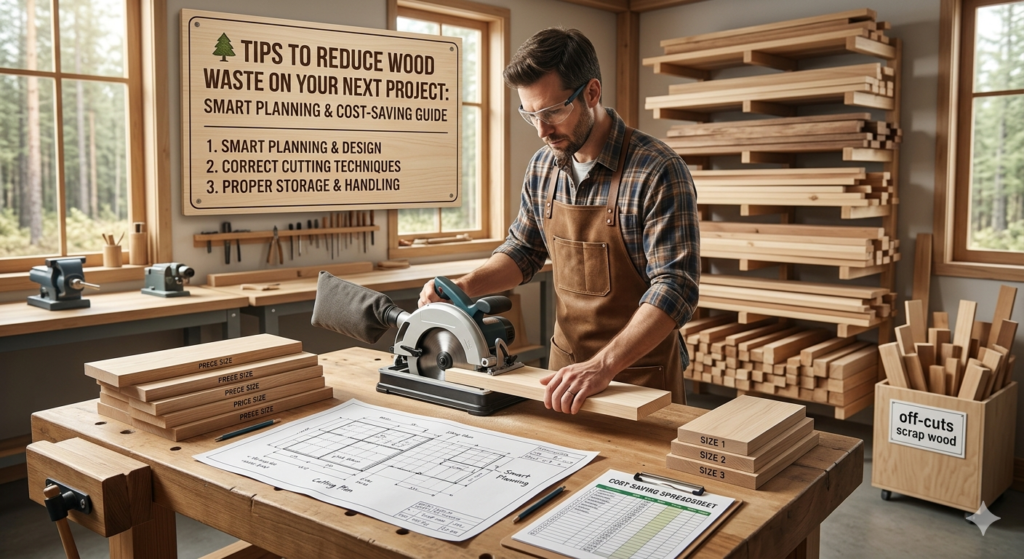
Reduce wood waste is important for saving cost, improving efficiency, and protecting the environment in any carpentry or home project.
Introduction
Wood is one of the most valuable materials in construction and carpentry. However, a lot of wood is wasted during projects due to poor planning, incorrect cutting, and lack of proper storage. Reducing wood waste not only saves money but also helps protect the environment.
In this guide, you will learn the best tips to reduce wood waste on your next project, whether you are working on kitchen cabinets, furniture, or home renovation.
📉 Why Reducing Wood Waste is Important
Before we dive into the tips, let’s understand why reducing wood waste matters.
💰 Cost Saving
Less waste means less material purchase, which directly reduces project cost.
🌍 Environmental Benefits
Using less wood helps reduce deforestation and protects natural resources.
🛠️ Better Efficiency
Proper planning leads to faster and smoother project completion.
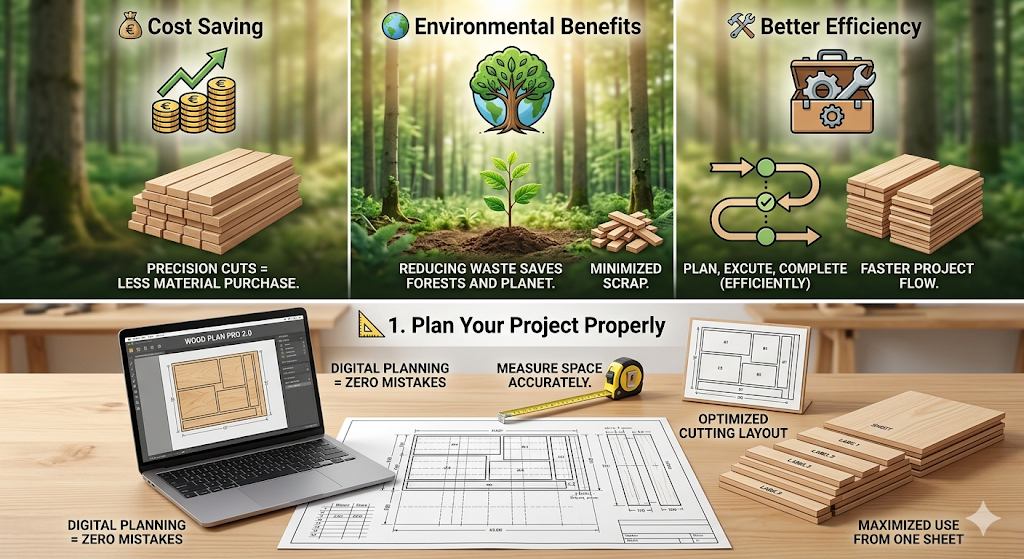
📐 1. Plan Your Project Properly
Proper planning is the most important step to reduce waste.
What to Do:
- Measure space accurately
- Create a cutting plan
- List required materials
Pro Tip:
Use a cutting layout before starting work. This minimizes mistakes.
✂️ 2. Use Smart Cutting Techniques
Cutting mistakes are a major cause of wood waste.
Best Practices:
- Measure twice, cut once
- Use sharp tools
- Mark cuts clearly
Tools to Use:
- Measuring tape
- Carpenter square
- Pencil marking
🪵 3. Choose the Right Wood Size
Buying the wrong size leads to more waste.
Tips:
- Select standard board sizes
- Avoid oversized sheets
- Match material with project
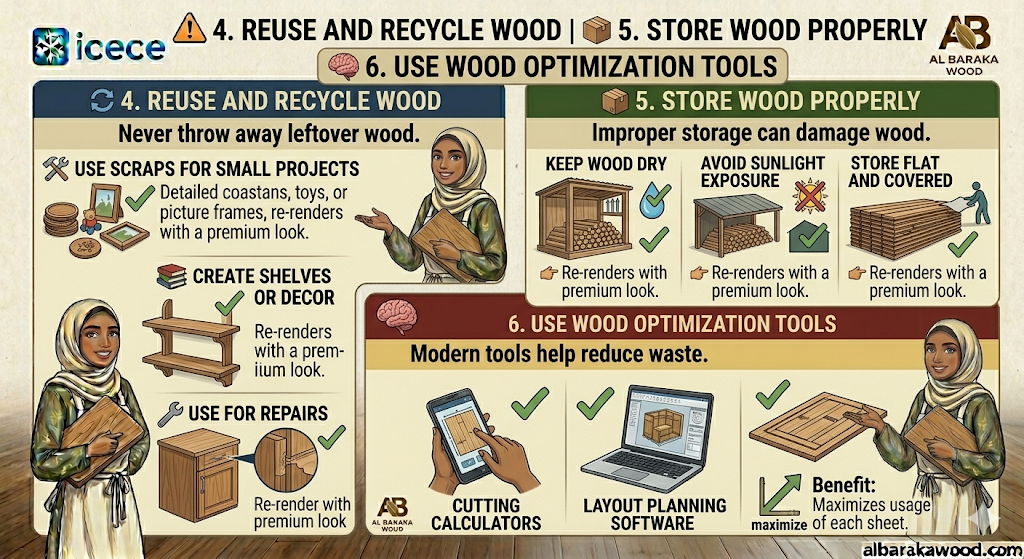
🔄 4. Reuse and Recycle Wood
Never throw away leftover wood.
Ideas:
- Use scraps for small projects
- Create shelves or decor
- Use for repairs
📦 5. Store Wood Properly
Improper storage can damage wood.
Storage Tips:
- Keep wood dry
- Avoid sunlight exposure
- Store flat and covered
🧠 6. Use Wood Optimization Tools
Modern tools help reduce waste.
Examples:
- Cutting calculators
- Layout planning software
Benefit:
Maximizes usage of each sheet.
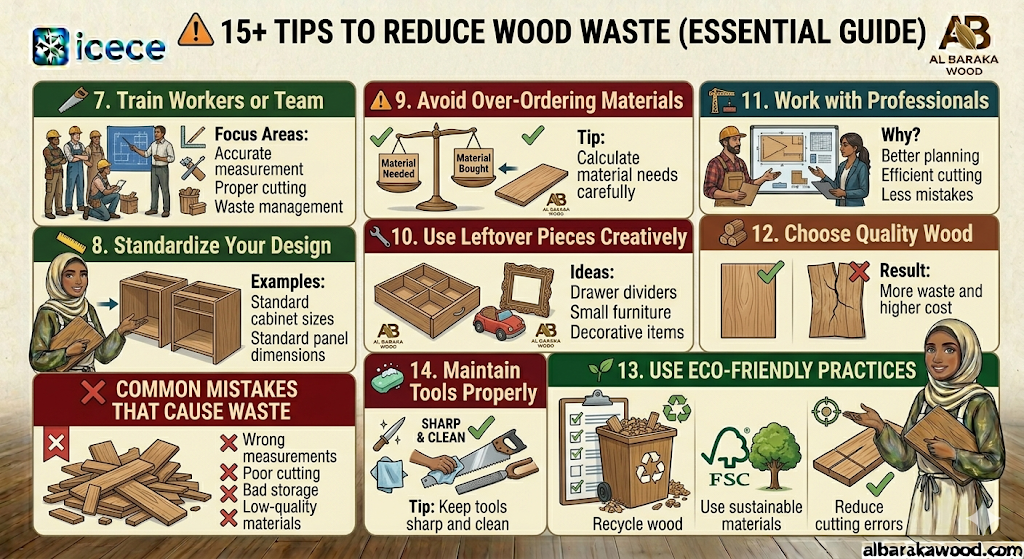
🪚 7. Train Workers or Team
If you have a team, proper training is essential.
Focus Areas:
- Accurate measurement
- Proper cutting methods
- Waste management
📏 8. Standardize Your Design
Using standard sizes reduces waste.
Examples:
- Standard cabinet sizes
- Standard panel dimensions
⚠️ 9. Avoid Over-Ordering Materials
Buying extra wood leads to unnecessary waste.
Tip:
Calculate material needs carefully.
🔧 10. Use Leftover Pieces Creatively
Small pieces can still be useful.
Ideas:
- Drawer dividers
- Small furniture
- Decorative items
🏗️ 11. Work with Professionals
Experienced carpenters reduce waste.
Why?
- Better planning
- Efficient cutting
- Less mistakes
🪵 12. Choose Quality Wood
Cheap wood may break or warp.
Result:
More waste and higher cost.
🌿 13. Use Eco-Friendly Practices
- Recycle wood
- Use sustainable materials
- Reduce cutting errors
🧼 14. Maintain Tools Properly
Dull tools cause bad cuts.
Tip:
Keep tools sharp and clean.
📊 15. Track Your Material Usage
Keep records of wood usage.
Benefit:
- Improves future planning
- Reduces waste over time
❌ Common Mistakes That Cause Wood Waste
- Wrong measurements
- Poor cutting
- Bad storage
- Low-quality materials
🏁 Conclusion
Reducing wood waste is not difficult if you follow the right steps. From proper planning and smart cutting to recycling leftover pieces, these tips to reduce wood waste on your next project will help you save money and improve efficiency.
Whether you are a homeowner or a professional, applying these strategies will make your projects more successful and environmentally friendly.
❓ FAQ Section (SEO BOOST)
Q1: How can I reduce wood waste?
👉 Plan properly, measure accurately, and reuse leftover wood.
Q2: Why is wood waste a problem?
👉 It increases cost and harms the environment.
Q3: What tools help reduce wood waste?
👉 Cutting calculators and layout tools.
Q4: Can leftover wood be reused?
👉 Yes, for small furniture and decor.
Q5: Does wood quality affect waste?
👉 Yes, poor quality wood leads to more waste.