
Discover the average size of a house cat, including weight, length, and comparisons with bobcats and Bengal cats. Complete size guide for cat
Introduction
If you’ve ever wondered about the average size of a house cat, you’re not alone. Many pet owners want to understand how big their cat should be, how it compares to other animals, and what factors affect its size.
In this complete guide, we’ll cover everything about the size of an average house cat, including comparisons like bobcat vs house cat size, Bengal cat vs house cat size, and even rare cases of a house cat the size of a dog.
📏 What is the Average Size of a House Cat?
The average size of a house cat depends on breed, diet, and genetics.
🐾 Standard Measurements:
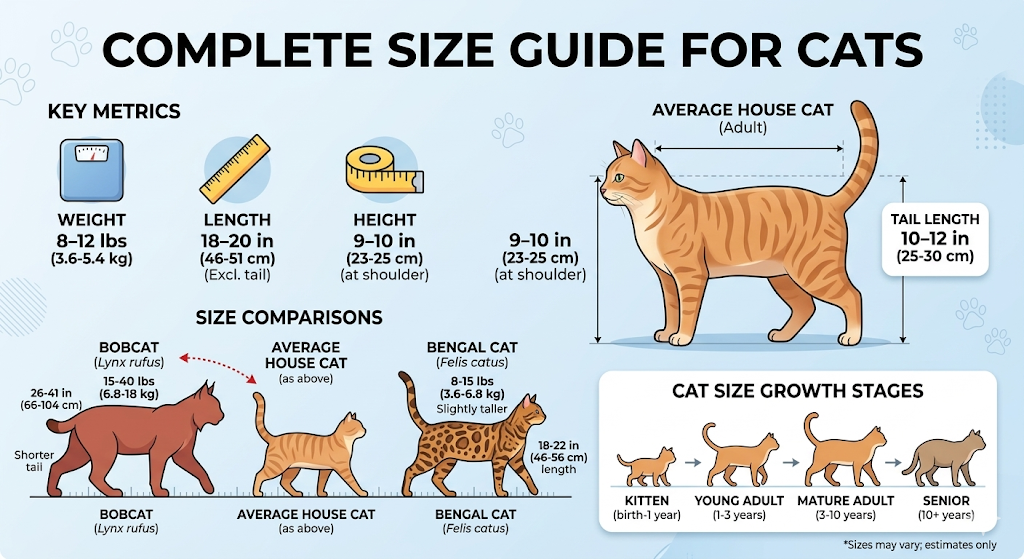
- Weight: 3.5 to 5.5 kg (7–12 pounds)
- Body Length: 18–24 inches
- Height: 9–10 inches
👉 So, the average size house cat is medium-sized and perfectly built for agility and flexibility.
📊 Size of Average House Cat (Detailed Breakdown)
When we talk about the size of average house cat, we consider:
🐱 Male Cats:
- Larger and heavier
- More muscular
🐱 Female Cats:
- Slightly smaller
- Lightweight and agile
👉 This explains why the average size of house cat can vary slightly.
🧠 House Cat Brain Size
An interesting fact many people search is house cat brain size.
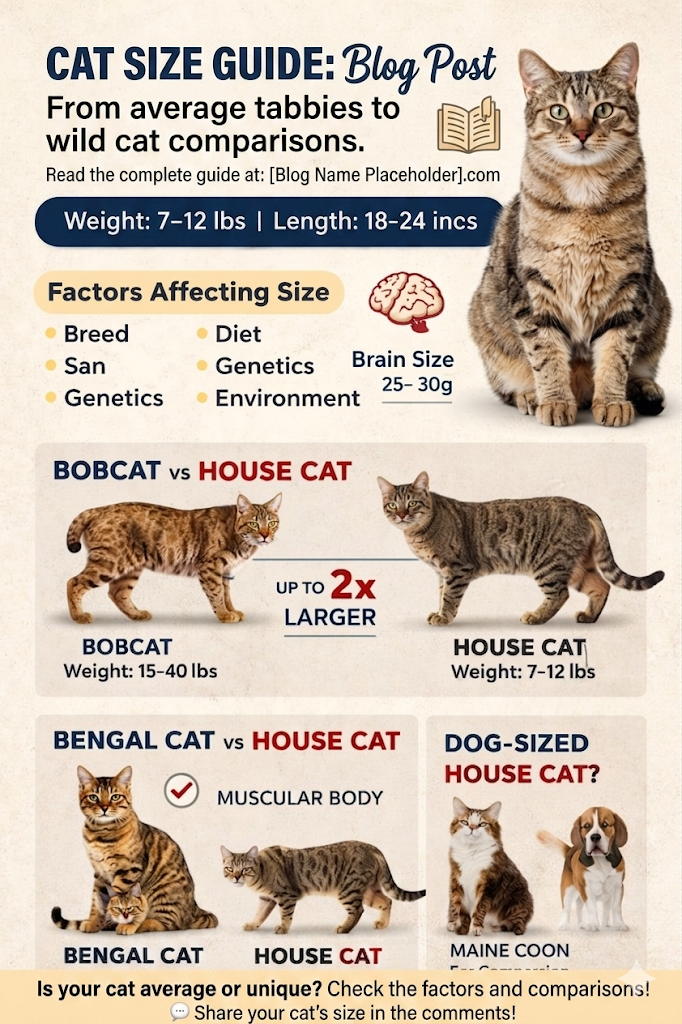
- Brain weight: around 25–30 grams
- Similar structure to wild cats
- Highly developed for hunting and instincts
👉 Despite small size, cats are very intelligent animals.
🐆 Bobcat Size vs House Cat
One common comparison is bobcat size vs house cat.
🐆 Bobcat:
- Weight: 6–18 kg
- Length: up to 40 inches
🐱 House Cat:
- Weight: 3.5–5.5 kg
- Length: 18–24 inches
👉 Clearly, a bobcat vs house cat size comparison shows that bobcats are 2–3 times larger.
🐆 Bengal Cat vs House Cat Size
Another popular search is Bengal cat vs house cat size.
🐯 Bengal Cat:
- More muscular
- Weight: 4–7 kg
- Longer body
🐱 Regular House Cat:
- Smaller build
- Less muscular
👉 So, in Bengal cat vs house cat size, Bengals are usually bigger and more athletic.
🐕 Dog Sized House Cat – Is It Possible?
Many people search for dog sized house cat or house cat the size of a dog.
🐾 Reality:
- Most house cats stay medium-sized
- Some large breeds (like Maine Coon) can grow bigger
🐱 Large Cat Breeds:
- Maine Coon
- Ragdoll
- Savannah Cat
👉 These cats can sometimes look like a house cat the size of a dog, but they are still smaller than most dogs. cat with house
🧬 Factors That Affect Cat Size
The average size of a house cat depends on several factors:
1. Breed
Different breeds have different sizes.
2. Diet
Healthy food helps proper growth.
3. Genetics
Size is often inherited from parents.
4. Environment
Indoor vs outdoor lifestyle affects size and weight.
🏡 Why Cat Size Matters for Owners
Understanding the average size of house cat helps in:
- Choosing the right cat house
- Providing proper food
- Maintaining health
- Avoiding obesity
🛏️ Ideal Cat House Based on Size
Based on the average size house cat, the ideal house should be:
- Length: 20–24 inches
- Width: 18–20 inches
- Height: 16–18 inches
👉 This ensures comfort and warmth.
⚖️ Healthy Weight vs Overweight Cat
Not all cats with larger size are healthy.
Healthy Cat:
- Active
- Lean body
Overweight Cat:
- Lazy
- Excess fat
👉 Always monitor your cat’s weight.
📈 Growth Stages of a House Cat
🐾 Kitten (0–6 months)
- Rapid growth
🐾 Young Cat (6–12 months)
- Near full size
🐾 Adult Cat (1–2 years)
- Fully grown
🐾 Fun Facts About Cat Size
- Cats can squeeze into small spaces
- Flexible spine helps movement
- Size does not affect intelligence
❓ FAQs
What is the average size of a house cat?
Around 3.5–5.5 kg and 18–24 inches long.
Can a house cat be as big as a dog?
Rarely, but some large breeds may appear like a dog sized house cat.
How does a bobcat compare to a house cat?
A bobcat vs house cat size comparison shows bobcats are much larger.
🧾 Final Thoughts
The average size of a house cat is perfect for agility, comfort, and adaptability. While some cats may grow larger depending on breed, most remain medium-sized.
Understanding size helps you provide better care, housing, and nutrition for your cat.