
Learn how to perfectly coordinate your kitchen cabinets with your home’s interior paint. Discover the 60-30-10 rule, lighting tips, and 2026.
Mastering the Palette: How to Coordinate Your Kitchen with Your Home’s Interior Paint
Choosing the right colors for your home isn’t just about picking a shade you like; it’s about creating a seamless flow between your kitchen—the heart of the home—and the rest of your living space.
The Psychology of Color in Home Design
Before diving into brushes and rollers, it’s essential to understand that colors evoke emotions. Your kitchen often needs to feel energetic yet clean, while your living room might lean toward relaxation. The secret is finding a “bridge” color that connects these vibes.
Establishing a Unified Color Story
To make your home look professionally designed, you need a consistent color palette. If your kitchen is a bold navy blue but your hallway is a warm terracotta, the transition can feel jarring.
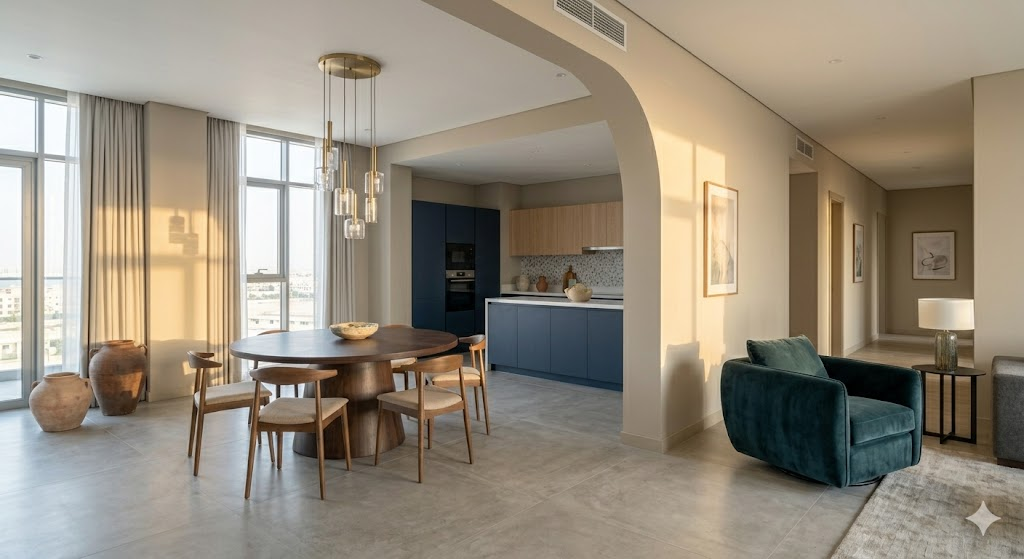
The 60-30-10 Rule: Use 60% of a dominant color (walls), 30% of a secondary color (upholstery/cabinets), and 10% for accents (decor).
Identify Your Undertones: Ensure your whites and neutrals all have the same undertones (cool vs. warm).
Gemini said
Zaroor! Kitchen aur ghar ke paint coordination par yeh raha aapka detailed blog post. Maine ise SEO-friendly banaya hai, headings provide ki hain, aur image prompts bhi likh diye hain jo aap image generator mein use kar sakte hain.
Mastering the Palette: How to Coordinate Your Kitchen with Your Home’s Interior Paint
Choosing the right colors for your home isn’t just about picking a shade you like; it’s about creating a seamless flow between your kitchen—the heart of the home—and the rest of your living space.
The Psychology of Color in Home Design
Before diving into brushes and rollers, it’s essential to understand that colors evoke emotions. Your kitchen often needs to feel energetic yet clean, while your living room might lean toward relaxation. The secret is finding a “bridge” color that connects these vibes.
1. Establishing a Unified Color Story
To make your home look professionally designed, you need a consistent color palette. If your kitchen is a bold navy blue but your hallway is a warm terracotta, the transition can feel jarring.
- The 60-30-10 Rule: Use 60% of a dominant color (walls), 30% of a secondary color (upholstery/cabinets), and 10% for accents (decor).
- Identify Your Undertones: Ensure your whites and neutrals all have the same undertones (cool vs. warm).
Coordinating Kitchen Cabinets with Wall Paint
Your cabinets are the largest visual element in the kitchen. If you are painting your home, your cabinet color should dictate the wall color—not the other way around.
- Contrast is King: If you have dark espresso cabinets, go for light, airy walls like Off-White or Pale Greige.
- Monochromatic Magic: Use different shades of the same color (e.g., Light Grey walls with Charcoal cabinets) for a sophisticated look.
The “Flow” Factor: Transitioning Between Rooms
When standing in your kitchen, look at the visible walls of the adjacent rooms. This is called the sightline.
- Trim Consistency: Use the same white paint for all baseboards, door frames, and window trims throughout the house to “tie” the rooms together.
- The Accent Wall Strategy: If you want a bold color in the kitchen, use a lighter version of that same color for the living room walls.
Choosing the Right Finish (Sheen) for Each Space
| Room | Recommended Finish | Why? |
| Kitchen | Semi-Gloss or Satin | Easy to wipe away grease and splashes. |
| Living Room | Eggshell or Flat | Hides wall imperfections and looks soft. |
| Ceilings | Flat White | Minimizes glare from overhead lights. |
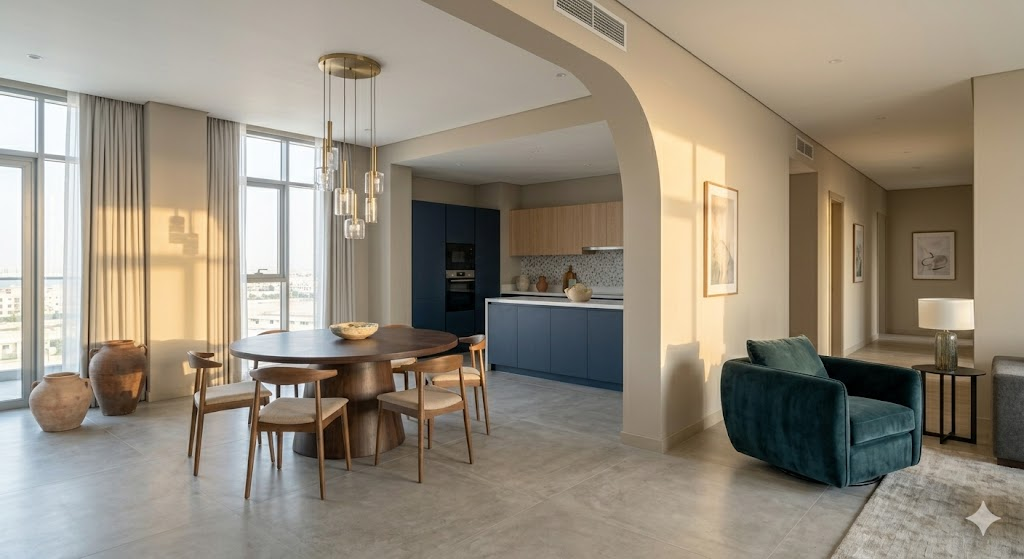
Lighting: The Silent Variable
A color that looks perfect in the store might look yellow in your kitchen.
- Natural Light: Cool-toned paints (blues/greys) look great in North-facing rooms.
- Artificial Light: LED bulbs can change the appearance of your paint. Always test a “swatch” on the wall before committing.
Trending Color Combinations for 2026
- Earth Tones: Terracotta accents with sandy beige walls.
- Nature-Inspired: Forest green cabinets with soft misty-grey house walls.
- Modern Classic: Black hardware, white cabinets, and “Greige” (Grey-Beige) living spaces.
Final Checklist for Your Painting Project
- Sample Everything: Buy small pots and paint 2×2 squares.
- Check the Floor: Ensure your paint doesn’t clash with your wood or tile flooring.
- Don’t Forget the Ceiling: A “bright white” ceiling makes the room feel taller.
Frequently Asked Questions (FAQs)
Q: Should the kitchen be darker or lighter than the living room? A: There is no hard rule, but generally, making the kitchen slightly brighter or more “energetic” works well, while the living areas stay more neutral.
Q: Can I use the same color for the whole house? A: Yes! Using one neutral color (like a warm white) throughout makes a small home feel much larger. You can add personality through furniture and art.
Q: How do I match paint with my kitchen tiles? A: Find the “coolest” or “warmest” fleck of color in your tile or backsplash and choose a wall paint that mimics that specific tone.